This Oven Baked Moroccan Chicken is a staple in my house for busy weeknights. It’s a hands-off, one-pan meal that can be prepared ahead of time, resulting in juicy chicken with a bright, tangy sauce that balances perfectly with warm spices.
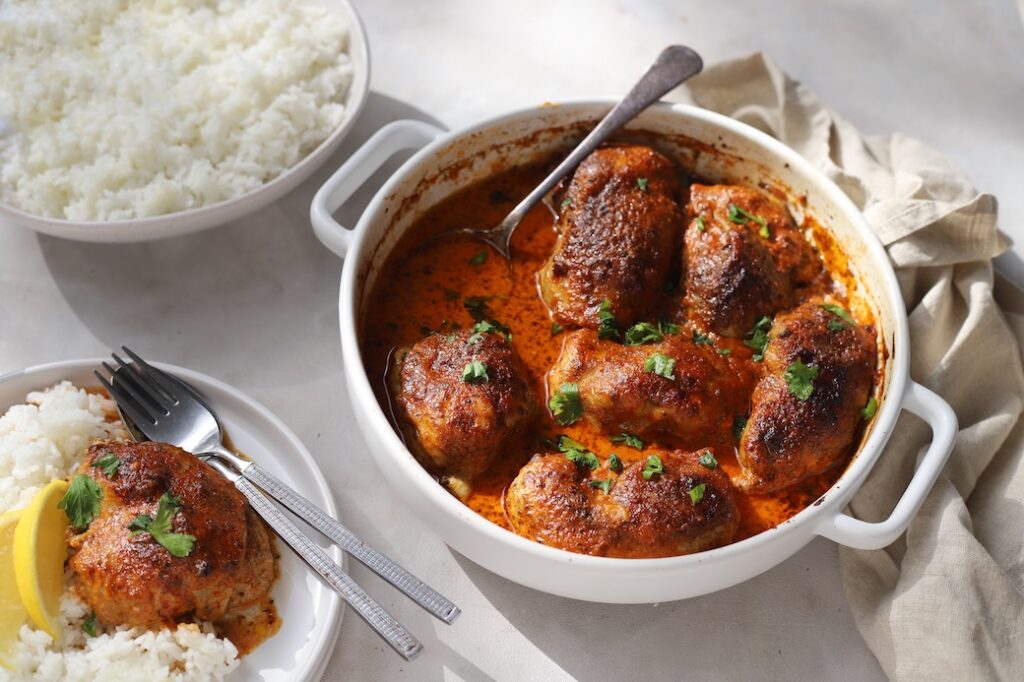
I first tried a version of this chicken at my mother-in-law’s house years ago. It quickly became the one meal I’d secretly hope for every time we were invited over for dinner. There was something about that sharp, tangy profile that was so addictive, yet for some reason, I put off making it in my own kitchen for years. I think I’d convinced myself it was more complicated than it actually was.
When I finally sat down to research the recipe, I realised how simple the foundation really was! It just needed a little fine-tuning for my own family’s palate. The original was wonderfully spicy and pucker-worthy, but having learnt from Samin’s Salt, Fat, Acid, Heat, I knew that a touch of sweetness would be the key to taking it from a simple sour note to a well-rounded, balanced sauce.
I added just a teaspoon of white sugar to the pour-over sauce, and it was the aha! moment the recipe needed. It didn’t make the dish sweet; it simply smoothed out the edges of the tanginess. My kids, who are usually my toughest critics, cleared their plates, and it has since earned a permanent spot in our weeknight rotation. I’ve tested this across several different cuts; while thighs remain the gold standard for juiciness in a long roast, you can absolutely use breast or drumsticks. Refer to the timing chart further down to avoid overcooking. It’s funny how a dish that felt so intimidating ended up being one of the most hands-off recipes in my repertoire.
This version was originally inspired by a recipe from Fatima at Sconce and Scones, which served as the foundation for the meal I grew fond of all those years ago.
Moroccan Chicken
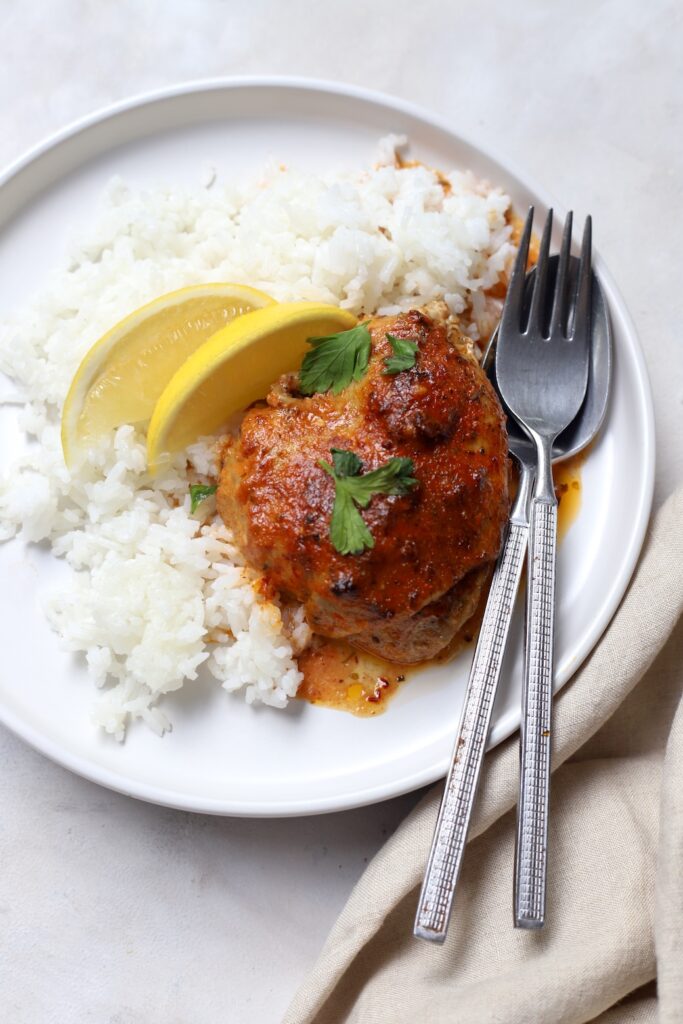
While “Moroccan Chicken” can refer to many things, from a slow-cooked tagine to a quick grilled skewer, this version is designed for the modern, busy kitchen. The goal here is maximum flavour with minimal physical labour. By using a two-stage cooking process, we ensure the chicken is deeply seasoned and the sauce remains bright and punchy, rather than over-reducing and losing its balance in the heat.
Why You’ll Love This Recipe
- Minimal Cleanup: Both the roasting and serving happens in one ceramic dish, keeping your post-dinner cleanup to a minimum.
- Balanced Flavour: Warm Moroccan spices and a tangy sauce, are balanced by a hint of sugar.
- Make-Ahead Friendly: You can dry-rub the chicken and mix the sauce the night before. When you’re ready for dinner, just slide the dish into the oven for a completely hands-off meal.
- Versatile: Whether you prefer thighs, drumsticks, or breast, the method ensures a juicy result every time.
In North African cooking, seasoning is everything. Roasting chicken without a proper dry rub is a missed opportunity for depth. By rubbing the spices directly onto the chicken first, we allow them to “toast” in the oven’s heat during the initial bake. This creates a base layer of flavour that won’t just wash away when the sauce is added later. It’s the difference between a dish that tastes “spiced” and one that just has “spices on it.”
You’ll notice I specify a ceramic baking dish for this recipe. Because this chicken spends a significant amount of time in the oven, a thin metal tray is likely to hot-spot, causing the delicate spices in the dry rub to burn or the sauce to evaporate too quickly. Ceramic holds heat and distributes it evenly, acting as a gentle “braiser” once the foil is removed and the sauce is added.
Most one-pan recipes tell you to throw everything in at once. However, for this specific tangy profile, we wait. By roasting the chicken covered for the first 45 minutes, we ensure it’s nearly cooked through and tender. We only pour the sauce over for the final 15 minutes. This allows the sauce to cook through and thicken slightly without losing that bright, zesty “pucker” that makes this dish so addictive.
Moroccan Chicken Ingredients
At first glance, the ingredient list might look a little long, but don’t let that overwhelm you! Aside from the chicken, the bulk of these items are just the spices you likely already have in your pantry. They come together in seconds to build a deep, aromatic base for this dish.
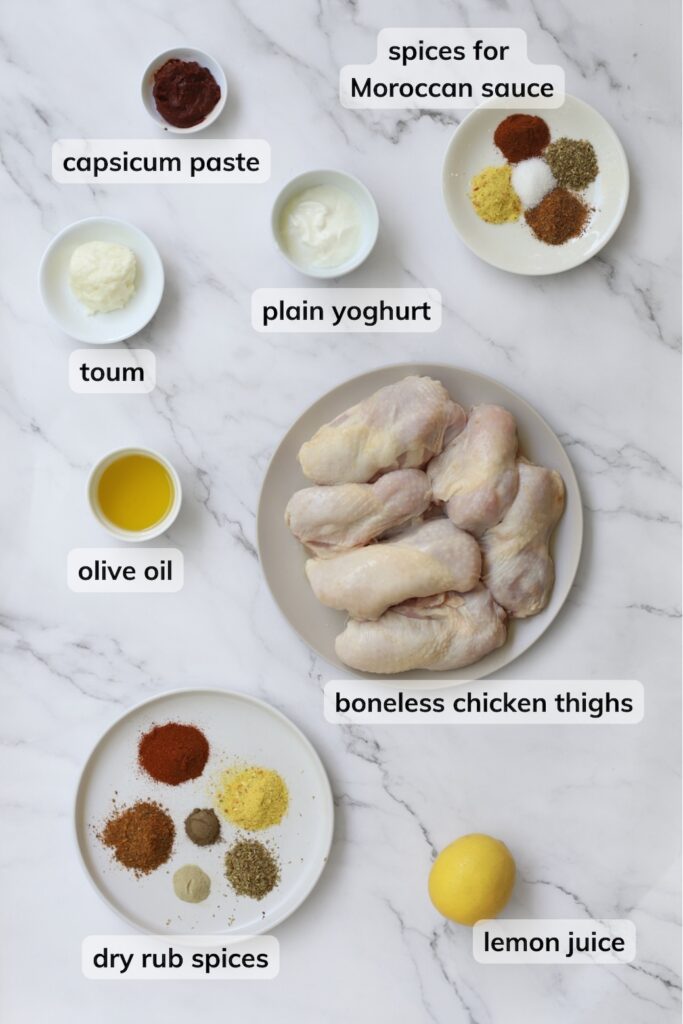
- Chicken Thighs: I recommend deboned, skin-on thighs. Keeping the skin on protects the meat during the long roast and provides the perfect surface for the dry rub to caramelise.
- Toum (Garlic Dip): This is the “secret weapon” for instant, intense garlic flavour and a creamy texture.
- ↳ Swap: If you can’t find it, use finely minced garlic mixed with a touch of mayonnaise or olive oil.
- Capsicum Paste (Biber Salçası): A staple in Middle Eastern cooking that adds a deep, smoky umami.
- ↳ Swap: Tomato paste or finely minced red bell peppers work well as a substitute. Alternatively, you can mix two tablespoons of sweet paprika with a teaspoon of water to form a thick paste.
- Yoghurt: Use a thick Greek or natural yoghurt. This provides the creamy body of the sauce and helps tenderise the chicken during the final stage of roasting.
- Lemon Juice: Fresh is best! This provides the bright “pucker” that cuts through the richness of the chicken.
- Moroccan Seasoning: Use your favourite store-bought blend (or see my DIY pantry version in the FAQs below).
- Paprika: I use Sweet Paprika for its vibrant red colour. If you want to dial up the heat, you can swap this for Cayenne pepper.
- Dried Oregano: Adds a subtle earthy, herbal note to the dish. Can be substituted with fresh oregano if that’s what you have on hand.
- Black and White Pepper: I use a combination of both to provide a full spectrum of heat. White pepper for a sharp “bite” and black pepper for lingering warmth. Using white pepper also ensures the sauce remains vibrant without becoming too dark. If you only have one on hand, feel free to substitute with whichever you have available.
- Vegetable Stock Powder: I use this as a total replacement for salt. It provides the necessary seasoning while adding a deeply savoury note that enhances all the other flavours.
- Olive Oil: Used to lightly grease the roasting dish and essential for emulsifying the sauce.
- Granulated Sugar: Just a small amount is used to round out the sharp acidity of the lemon and yoghurt.
Method
This recipe comes together in two simple stages, allowing the oven to do most of the work.
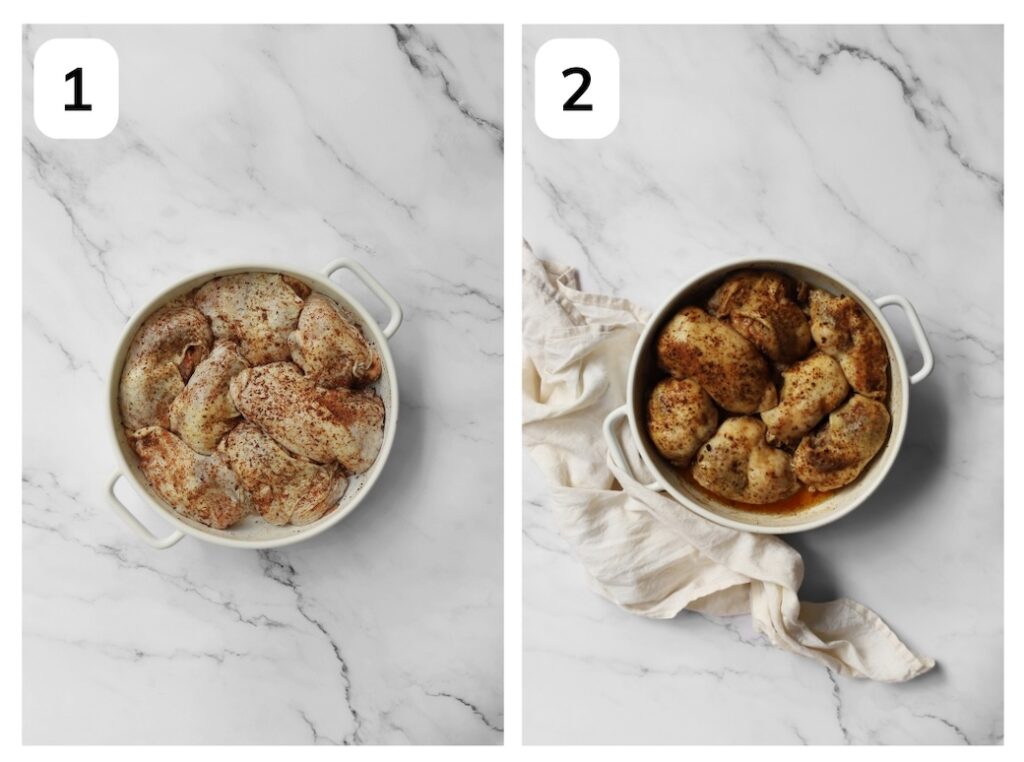
Start by arranging the chicken thighs snugly in a greased roasting dish. Apply the dry rub evenly, ensuring you work the spice mix under the skin for maximum seasoning. Cover with aluminium foil and roast for approximately 50 minutes at 180°C (fan-forced). This process allows the spices to bloom into the rendering fats.
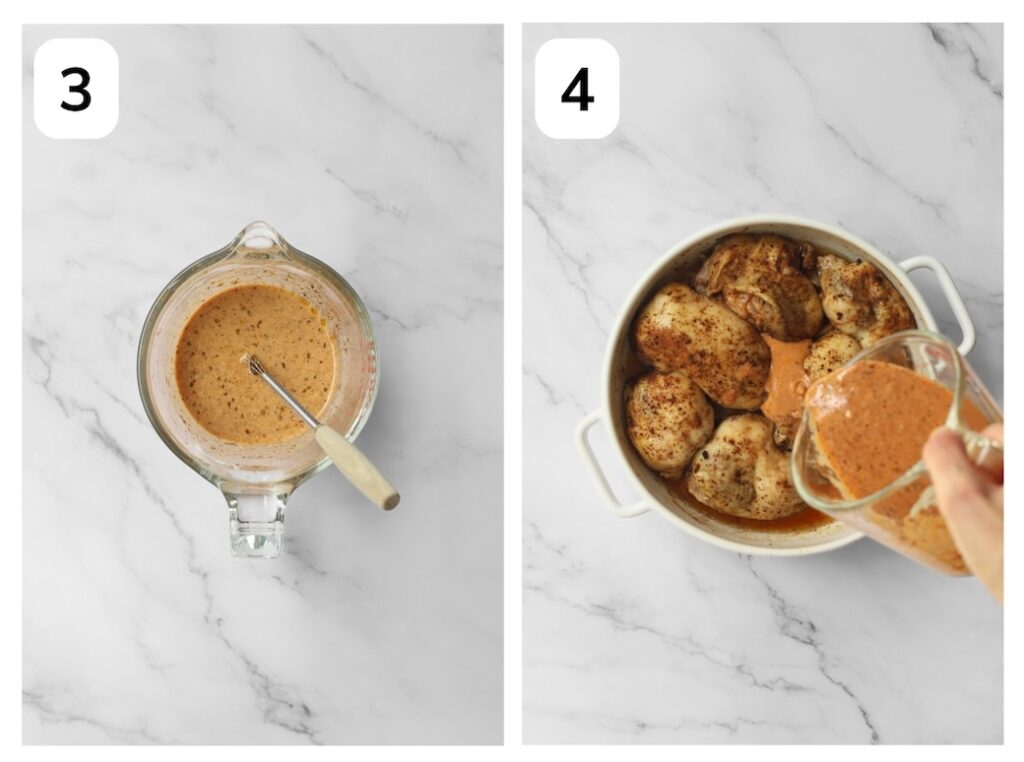
Next, remove the foil and inspect the liquid level. Pour out roughly half of the pan juices if the liquid is more than halfway up the chicken; this prevents the final sauce from becoming watery. Whisk your sauce ingredients until smooth and douse the chicken thoroughly.
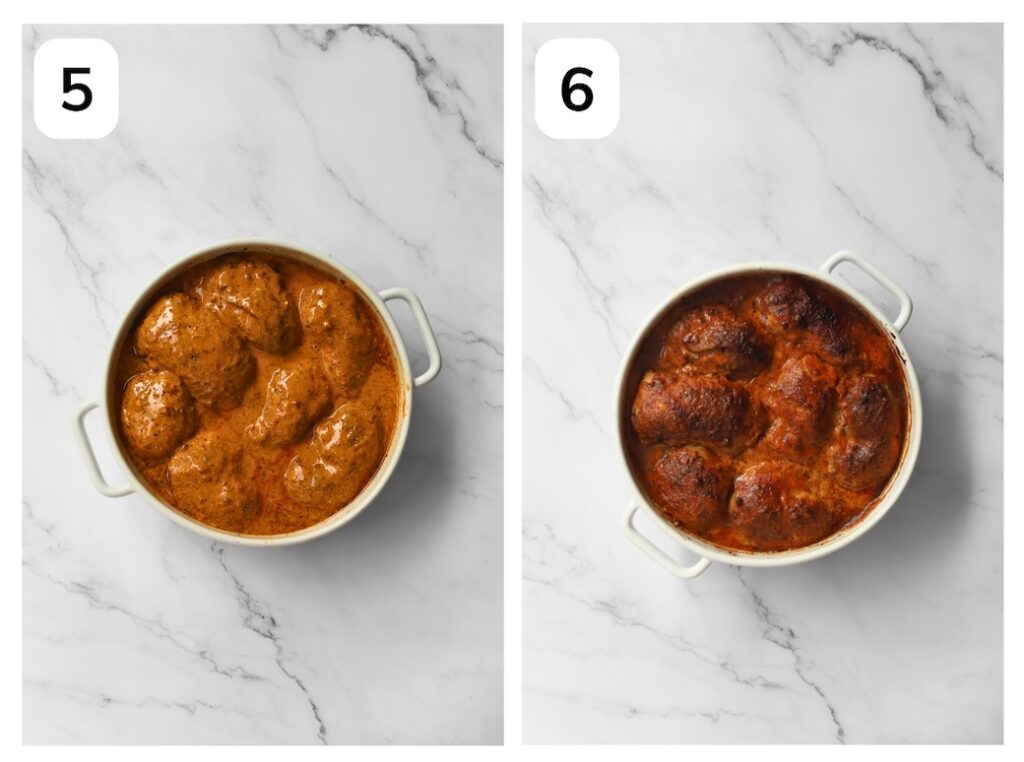
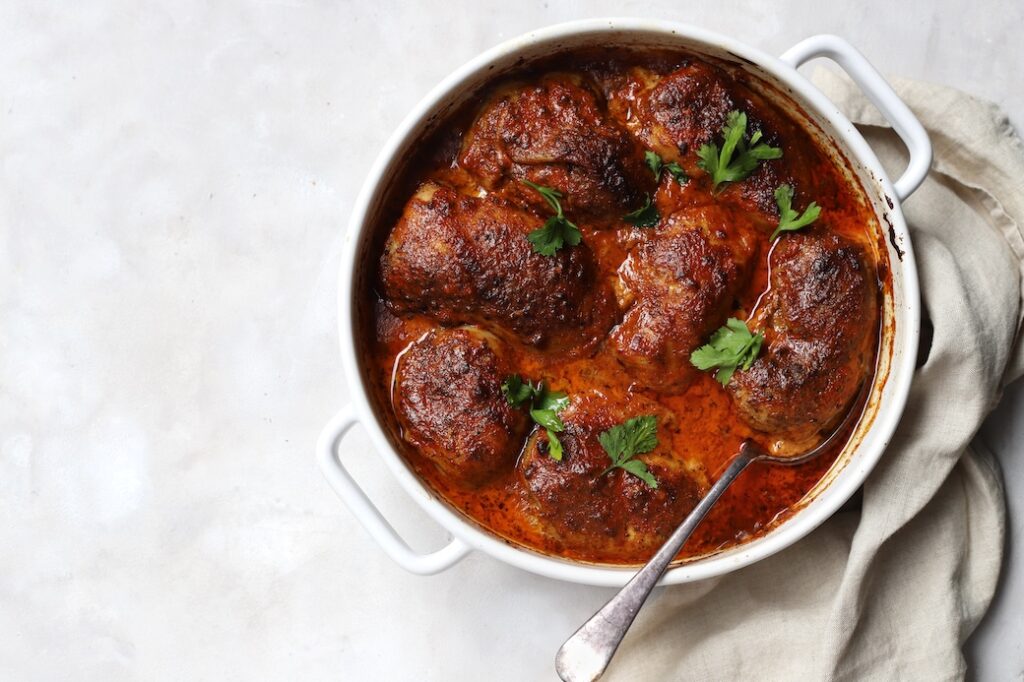
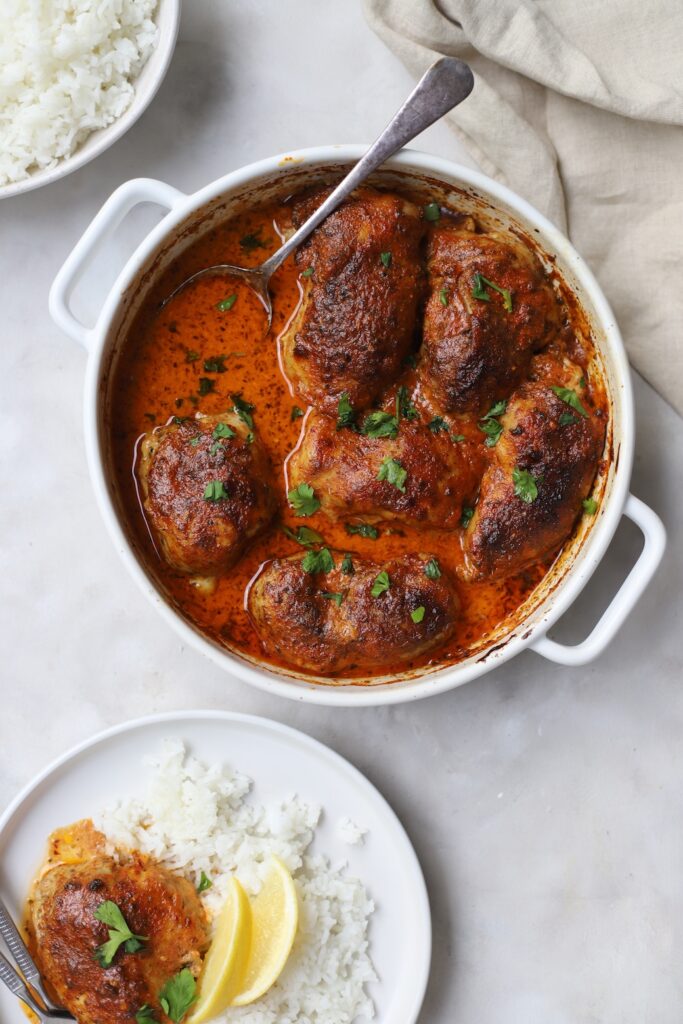
Return the dish to the oven, uncovered, for the final 15 minutes. This direct exposure emulsifies the sauce into a stable, glossy glaze and caramelises the skin. Watch for the sauce to thicken and cling to the meat. Once the timer ends, let the chicken rest for five minutes. This allows the internal juices to redistribute before you garnish and serve it with rice or vegetables.
FAQ
What is the best cut to use for this Moroccan Chicken?
While many Moroccan recipes use a variety of cuts, deboned, skin-on chicken thighs are the superior choice here. The higher fat content allow the meat to remain succulent during the long roast, whereas chicken breast tends to be drier.
Can I use other cuts of chicken?
While deboned, skin-on thighs are my top recommendation for moisture and flavour, you can adapt this two-stage roasting method for other cuts. Use the chart below to adjust your roasting times.
Adjusted Cook Times for Different Cuts
| Chicken Cut | Primary Roast | Total Cook Time |
| Deboned Thighs | 50 minutes | 65 minutes |
| Thighs (Bone-in) | 60 minutes | 75 minutes |
| Drumsticks | 45 minutes | 60 minutes |
| Maryland (Whole Leg) | 65 minutes | 80 minutes |
| Chicken Breast | 25 minutes | 40 minutes |
Note: Oven temperatures and chicken sizes vary. Use these times as a guide and always verify that the internal temperature has reached 75°C at the thickest part of the meat before serving.
What are the best Moroccan spice blends available in Australia?
Brands like Hoyts or MasterFoods are great and available in most major Australian supermarkets. Ensure your mix includes paprika, coriander, and cumin for that authentic flavour profile. I have also used the MasterFoods Harissa Middle Eastern Spice Blend as a substitute with great success. If you aren’t in Australia or prefer to shop online, this Moroccan Spice Blend is an excellent, authentic option for my US-based readers.
Can I make my own Moroccan spice blend at home?
Absolutely. If you want the best spice blend tailored to your pantry, you can whisk together this quick DIY version:
- 1 tbsp sweet paprika
- 2 tsp pepper (black or white pepper is fine)
- 2 tsp garlic powder
- 2 tsp onion powder
- 1 tsp ground coriander
- 1 tsp ground cumin
- 1 tsp ground ginger
- ½ tsp ground turmeric
- 1 tsp dried rosemary (crushed finely), substitute with dried oregano if you don’t have this one hand
- 1 tsp granulated sugar
How do I make an easy Moroccan chicken recipe for weeknights?
The key to making this an easy weeknight meal is the “prep-ahead” factor. You can apply the dry rub to the chicken up to 24 hours in advance. When you get home, simply pop it in the oven for the primary roast while you handle other tasks. The oven does all the heavy lifting!
What is the best way to store and reheat leftovers?
Store leftovers in an airtight container in the fridge for up to 3 days. The microwave is the most efficient way to reheat this dish. To keep the chicken succulent and prevent the yogurt-based sauce from splitting, use a medium power setting and reheat in short bursts. Covering the dish will trap the steam, ensuring the chicken stays tender while the sauce remains creamy and glossy.
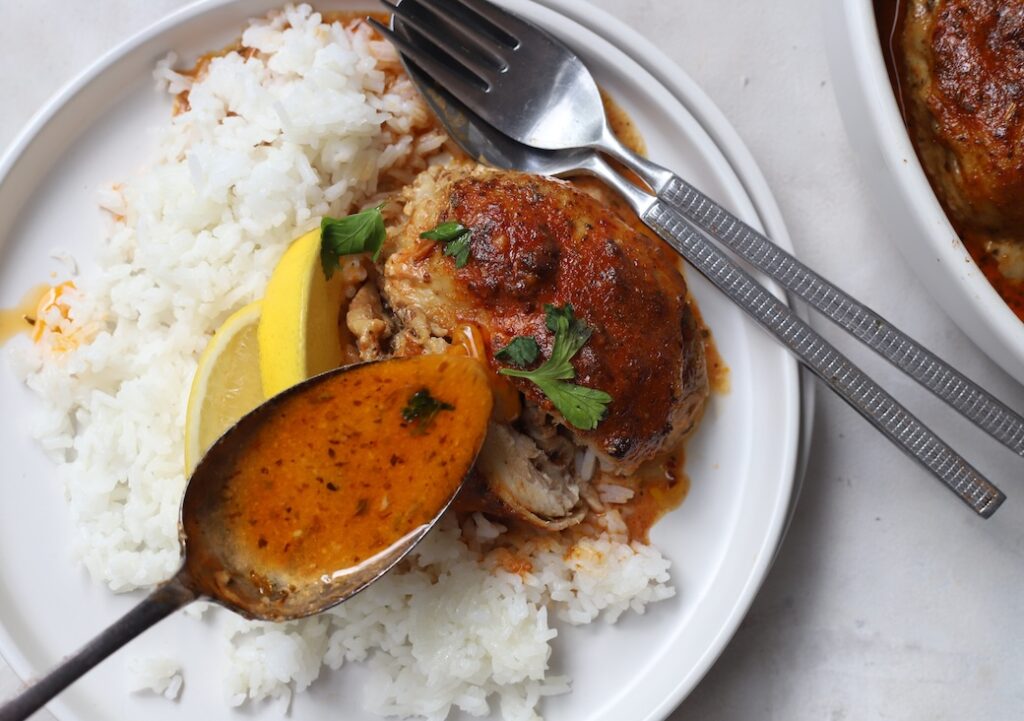
Oven Baked Moroccan Chicken
Ingredients
For the Chicken & Dry Rub:
- 1 kg (2 lbs) deboned, skin-on chicken thighs
- ½ tbsp Moroccan seasoning
- ½ tbsp sweet paprika
- ½ tbsp vegetable stock powder, see notes below
- 1 tsp dried oregano
- ½ tsp black pepper
- ½ tsp white pepper
For the Moroccan Sauce:
- ⅙ cup plain greek yogurt
- ⅙ cup toum (garlic dip), see substitution in notes below
- ⅙ cup capsicum paste (biber salçası), see substitution in notes below
- ⅙ cup olive oil
- ½ tbsp Moroccan seasoning
- 1 tsp dried oregano
- 1 tsp granulated sugar
- ½ tbsp vegetable stock powder
- ¼ cup lemon juice
Instructions
- Preheat the oven to 200°C (390°F) or 180°C (350°F) fan forced.
- Prepare the chicken: Arrange the chicken thighs snugly in a greased ceramic roasting dish. Combine the dry rub spices and coat the chicken evenly, ensuring you apply the seasoning under the skin for maximum flavour.
- Primary roast: Cover the chicken with foil and bake for 50 minutes until almost entirely cooked through.
- Adjust the liquid: Remove the foil and inspect the pan juices. If the liquid has risen above the halfway point of the chicken, pour out roughly half of the excess to prevent the sauce from becoming watery.
- Apply the glaze: Whisk the sauce ingredients together until smooth. Douse the chicken thoroughly, ensuring each piece is well-coated.
- Final roast: Return the dish to the oven, uncovered, for a final 15 minutes. Roast until the sauce emulsifies into a glossy glaze and the skin caramelises.
- Rest and serve: Let the chicken rest for five minutes before serving with rice, flatbreads, or vegetables.
Notes
- Vegetable stock powder is used as a total replacement for salt. If you don't have this on hand, you can successfully substitute it with chicken or beef stock powder.
- Toum can be substituted with finely minced garlic mixed with a touch of mayonnaise or olive oil.
- Capsicum paste can be substituted with tomato paste or finely minced red bell peppers. Alternatively, you can mix two tablespoons of sweet paprika with a teaspoon of water to form a thick paste.
- Adjust the cooking time based on the cut of chicken you're using. Breasts cook much quicker than thighs. Use the cooking chart in the post above as a guide.
Inspiration & More Favourites
Creamy Chicken and Potato Bake: If you love the simplicity of a one-pan meal where the oven handles the heavy lifting, this is a must-try for your weeknight rotation.
Tandoori Fish (Oven Baked): This recipe is quick to make, low carb, and dairy-free. It yields a tender, spiced fish that pairs perfectly with rice or flatbreads.
Baharat Baked Chicken at The Mediterranean Dish: Juicy baked boneless chicken thighs with a Middle Eastern twist using a bold garlicky marinade and baharat.
Harissa Chicken at Hungry Paprikas: For those who want a spicier, honey-glazed version, Amina offers a beautiful authentic take using harissa paste.
Leave a Reply