This Asian Glazed Salmon is a succulent, one-pan meal loaded with umami flavour. I’ve developed the glaze using just 5 pantry staples! Whether you’re roasting the wedges from scratch with my no-parboil method or using a cheeky weeknight shortcut, this is the ultimate low-effort, high-reward dinner.

This recipe actually started eight years ago as a bit of a kitchen ’emergency.’ I found myself standing in front of the fridge with some frozen fish fillets, a partner to feed, and a desperate need to impress (we’d only been together for a few months, and I’d boasted to him I’m a great cook 😂). So naturally, I did what I do best when the pantry looks bare: I grabbed every bottle of sauce I could find and started experimenting with what I had.
I remember those fillets vanishing in record time, I’d never seen someone eat food so quickly, and still tease him about it to this day! Since then, that ’emergency’ sauce has evolved into this perfected Sheet Pan Asian Glazed Salmon, optimised for the perfect balance of sticky caramelisation and tender, flaky fish.
Why You’ll Love This One-Pan Dinner
There is a reason this has become my go-to dinner for nights when I want a low-effort meal but refuse to compromise on flavour. Here is why you’re going to love it:
-
True One-Pan Cooking: Everything happens on a single tray. That means no extra pots to scrub and no messy stovetop to wipe down.
-
The “Staggered Start” Method: By roasting the wedges first while you prep the glaze, you get perfectly crispy potatoes and succulent salmon without any active time at the stove..
-
Pantry-Staple Glaze: No last-minute dash to the shops for fresh ginger or obscure ingredients. If you have the 5 basics in your cupboard, you’re ready to go.
-
Minimal Prep: Most of the ‘cook time’ is passive oven time. It’s the perfect recipe for those evenings when you want a high-quality meal but don’t have the energy for complex techniques.
- Customisable: Once you master the glaze ratio, it’s a ‘blueprint’ recipe. You can swap the salmon for barramundi, or even firm tofu.
The Secret to Crispy Wedges (No Par-Boiling Required)
The biggest barrier to making homemade wedges is usually the extra step of par-boiling. But after making this dish dozens of times, I’ve found that you can skip the extra pot entirely by using a staggered start. The logic is simple: potatoes take significantly longer to cook than salmon. By roasting the wedges at a high heat (200°C) for the first 25–30 minutes, they develop a crispy outer shell and a fluffy interior before the salmon even touches the tray.
A Note on Choosing Your Potato: To ensure you get that signature golden brown finish without boiling, the variety of potato really matters. I always reach for a floury variety like the Sebago (the classic Australian all-rounder). Russet (US) or King Edward (UK) potatoes also work brilliantly. These varieties have a lower water content, meaning they crisp up beautifully in the dry heat of the oven. Just toss them in a neutral oil with a high smoke point, a generous pinch of sea salt. From there, you can let the oven do the heavy lifting while you whisk together the glaze.
The Best Asian Glaze Recipe on the Internet
I don’t make that claim lightly. There is a beautiful logic to why this five-ingredient combination works so perfectly. It’s all about the balance of flavours, a concept famously explored in Samin Nosrat’s Salt, Fat, Acid, Heat. In this glaze, every ingredient has a specific job to do:
- The Umami Balance: The kecap manis (sweet soy sauce) is the heavy lifter here. It’s thicker and more syrupy than regular soy, providing a deep sweetness that helps create a glossy, lacquered finish on the salmon. The fish sauce delivers a salty, fermented umami depth. Together, they create a ‘restaurant-quality’ depth that you just can’t get from soy sauce alone.
- The Aromatics: To keep the glaze from feeling one-dimensional, I use a combination of sweet chilli sauce for acidity and heat, and fresh garlic. I always recommend using fresh cloves as it adds a fragrant, earthy aroma that rounds out the sweetness of the sauces perfectly.
- The Science of Fat: You might notice this glaze uses oil, this is the ‘secret’ to its success. Flavours love to stick to fat molecules. The oil acts as a carrier, prolonging the release of those delicious notes on your palate so you can enjoy the taste for longer.
But the oil does more than just carry flavour! As the salmon bakes, the oil also helps those sugars in the kecap manis caramelise into a stunning, sticky coating. It’s science at its most delicious, and once you see that final result, you’ll wonder why you didn’t try this sooner.

What You’ll Need for this Sheet Pan Salmon & Wedges
This incredible dinner comes together with only 7 ingredients. Here is what you’ll need:
-
Salmon Fillets: I usually go for skin-on fillets for that extra hit of healthy fats, but skinless works perfectly too. If you aren’t a fan of salmon, this glaze is incredibly versatile. It works beautifully with Barramundi, Snapper, or even firm Tofu. Just remember to adjust your baking time based on the thickness of your fillets.
-
Sebago or Russet Potatoes: As mentioned earlier, the variety is key! You want a floury potato that can stand up to the high heat of the oven and deliver that fluffy interior.
-
Kecap Manis: If you can’t find this in the international aisle of your supermarket, look for ‘Sweet Soy Sauce.’ It’s much thicker than standard soy, which allows it to cling to the fish and create a rich glaze as it bakes.
-
Fish Sauce: A staple in Southeast Asian cooking. It adds a deep, savoury saltiness to the glaze.
-
Sweet Chilli Sauce: This provides sugar and adds a small amount of heat to the glaze. Any standard brand from your pantry will do.
-
Sunflower Oil (or Peanut Oil): You want a neutral oil with a high smoke point. I personally love using peanut oil here because it adds a very subtle, toasted nuttiness that complements the soy flavours beautifully.
-
Fresh Garlic: Use three large cloves to provide that essential aromatic backbone. If you’re a true garlic lover, feel free to measure with your heart and add an extra one!
How to Make this Easy Sheet Pan Salmon and Wedges
While the oven handles the heavy lifting, you prep the next element without feeling rushed. Here is the step-by-step method for the perfect oven-roasted meal.
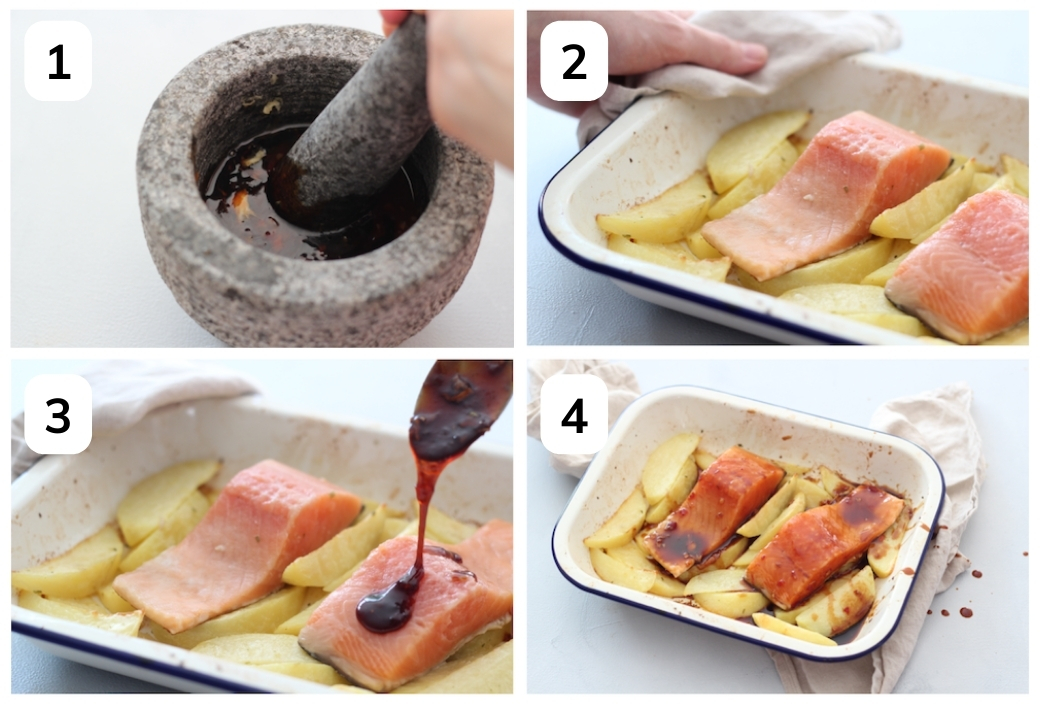
Step 1: Roast the Wedges
Preheat your oven to 200°C / 400°F (180°C fan-forced). Slice your potatoes into even wedges and toss them directly on a large baking tray with a splash of oil and a good pinch of sea salt. Spread them out to ensure they bake up crispy. Roast them for 25 minutes, giving them a quick toss halfway through to ensure even browning.
Step 2: Prepare the 5-Ingredient Glaze
While the potatoes are getting their head start, make the glaze. I love using a mortar and pestle for this step to reduce dishes, but this is totally optional. Freshly crush your garlic, then whisk in the kecap manis, sweet chilli, oil, and fish sauce until the glaze is thick and glossy.
Step 3: The Staggered Start
Once your 25-minute timer goes off, place fish fillets in the centre and pour over about two-thirds of the glaze. This initial layer will seep into the fish as it bakes, keeping it succulent and flavourful.
Step 4: The Final Caramelisation
Slide the tray back into the oven for 10 minutes. For the final touch, remove the tray and brush the remaining glaze over the salmon. Return it to the oven for a final 2-3 minutes until the sauce is bubbling, slightly charred at the edges, and the salmon flakes easily with a fork.
Frequently Asked Questions
To help you get the best results in your own kitchen, I’ve rounded up the most frequently asked questions about this Sheet Pan Asian Glazed Salmon.
Can I make Asian Glazed Salmon in an Air Fryer?
You absolutely can! An air fryer is essentially a high-powered, compact convection oven, making it perfect for achieving that sticky caramelisation on the salmon. To adapt this recipe, I recommend air-frying your wedges at 200°C for about 15-18 minutes, shaking the basket halfway through. Once they are golden, add your glazed salmon fillets and cook for a further 8–10 minutes. Because air fryers vary in intensity, keep a close eye on the glaze in those final minutes to ensure those delicious sugars don’t cross the line from caramelised to burnt!
Can I use frozen salmon for this recipe?
Yes, however, for the best results, I recommend thawing the fillets completely in the fridge overnight before you start. If the salmon is still icy in the middle, it may release too much moisture onto the tray, which can lead to soggy wedges, and we definitely want to protect that crunch we worked so hard for.
Can I use store-bought frozen wedges instead of fresh potatoes?
Absolutely! If you’re short on time, store-bought frozen wedges are a brilliant shortcut. Since they are usually par-fried before being frozen, they often crisp up even faster than fresh potatoes.
To make this work with the ‘Staggered Start’ method, check the packet instructions for the cooking time (usually around 20–25 minutes). Pop them in the oven first, and simply add your glazed salmon to the tray when the wedges have about 10-12 minutes left to go. You’ll still get a delicious sheet pan dinner with half the prep work.
How do I know when the salmon is perfectly cooked?
The ‘flake test’ is the most reliable way to check. Gently press the thickest part of the fillet with a fork; if it separates easily it’s ready. You can also use an instant read thermometer and pull the fillets out when they hit 52ºC (125ºF). Remember, the fish will continue to cook for a minute or two on the hot tray once it’s out of the oven, so don’t be afraid to pull it out just as it reaches that flaking point.
Can I make this ahead of time?
This dish is definitely best when served fresh from the oven, as the wedges lose their crispness over time. However, you can absolutely prep the glaze up to 3 days in advance and store it in an airtight jar in the fridge. You can also prep your potatoes a day early; simply slice them into wedges and store them in a bowl of cold water in the fridge overnight. This actually helps remove some of the surface starch, which can result in an even crispier wedge! When you’re ready to cook, just pat the potatoes thoroughly dry, toss them on the tray, and you’re halfway to dinner.
How should I store and reheat leftovers?
If you happen to have leftovers, they’ll keep in an airtight container in the fridge for up to two days. To reheat, I recommend popping the salmon and wedges back into a 180°C oven or air fryer for about 5-8 minutes. This helps the potatoes regain some of their texture and prevents the salmon from becoming rubbery, which can happen in the microwave.
Asian Glazed Salmon
Ingredients
- 2 salmon fillets
- 500 g brushed Sebago potatoes (approx. 2 large potatoes), scrubbed and cut into wedges
For the glaze
- 1/4 cup kecap manis (sweet soy sauce)
- 1/4 cup sweet chilli sauce
- 1/4 cup neutral oil, (see note 1 below)
- 1/2 tsp fish sauce, (about 4 dashes from the bottle)
- 3 cloves fresh garlic, minced
Instructions
- Roast the WedgesPreheat the oven to 200°C / 400°F or 180°C / 375°F fan forced.Add the potato wedges directly onto a large baking tray and toss with a splash of neutral oil and a generous pinch of sea salt. Spread them into a single layer and bake for 25 minutes, giving the tray a quick toss halfway through.
- Prepare the GlazeWhile the potatoes are roasting, prepare the glaze. Use a mortar and pestle to crush the garlic into a paste, then whisk in the kecap manis, sweet chilli sauce, oil, and fish sauce until the mixture is thick, glossy, and well combined. (Alternatively, finely mince the garlic and whisk everything together in a small bowl).
- Add Salmon to WedgesOnce the 25-minute timer for the potatoes is up, remove the tray from the oven. Place your salmon fillets directly onto the wedges, and brush generously with ⅔ of the glaze. Return the tray to the oven and bake for 8 minutes.
- Finish and ServeFinally, pour the remaining sauce over the fillets and return to the oven for 5 minutes until sauce caramelises and the fish is cooked through. Garnish with sesame seeds and shallots if desired, serve.
Notes
- Choosing Your Oil: I recommend using a neutral oil with a high smoke point, such as canola, sunflower, or vegetable oil, to allow the glaze's flavours to shine. For a beautiful nutty undertone, peanut oil is a fantastic choice. Avoid olive oil here, as its distinct flavour can clash with the delicate balance of the Asian aromatics. For an extra layer of depth, a few drops of toasted sesame oil added to the glaze works wonders.
- Double-Glazing: You can technically pour all the sauce over at once and bake for 15 minutes, but I don't recommend it! Basting the fish twice creates a superior layered finish, allowing the first coat to seep into the fish while the second coat creates that signature sweet, sticky, and deeply caramelised look.
- Air Fryer Adaptation: This recipe works beautifully in an air fryer. Start by air-frying your wedges at 200°C for 15-18 minutes (shaking the basket halfway). Once golden, add the salmon and cook for a further 8-10 minutes, glazing twice as per the recipe. As air fryers vary in intensity, keep a close eye on the glaze in the final minutes to ensure the sugars don't burn.
More One-Pan Dinners & Potato Favourites
If the ‘staggered start’ method for crispy potatoes has changed your weeknight dinner game, you might want to try a few of my other favourite comfort meals. Here are a few dishes that I think you’ll love:
-
Creamy Chicken & Potato Bake: If you’re looking for a cosy, crowd-pleasing bake that uses the same ‘all-rounder’ potato we used today, this one pan meal is the one for you.
- Oven Baked Tandoori Fish: This Tandoori fish is another fantastic way to prepare fish that’s incredibly delicious yet simple enough for a Tuesday night. It swaps the sticky sweetness of kecap manis for a vibrant, earthy blend of cumin, turmeric, and lemon juice.
-
Hoisin Maple Glazed Salmon and Veg: This sheet pan Salmon and Veg uses a similar umami flavour profile, perfect for those nights when you want a ‘takeout’ feel at home.
-
Garlic Butter and Chicken Potatoes: Uses simple, high-quality ingredients to create a truly comforting and effortless family meal.
We tried this recipe for dinner last night and it was so quick and easy to make, and it was so delicious we are adding it to our rotation meals!